Natural lime plaster: properties and laying techniques
Does your home need a solution that combines humidity control with timeless aesthetics? L’natural lime rendering meets precisely these two requirements letting your masonry breathe in style. Here we look at the technical characteristics and rigorous installation methods to ensure a healthy, long-lasting result.
What is natural lime coating?
While the appeal of healthy living continues to grow, it is important to understand the very material that makes this possible before applying it at home.
Composition and properties of air lime
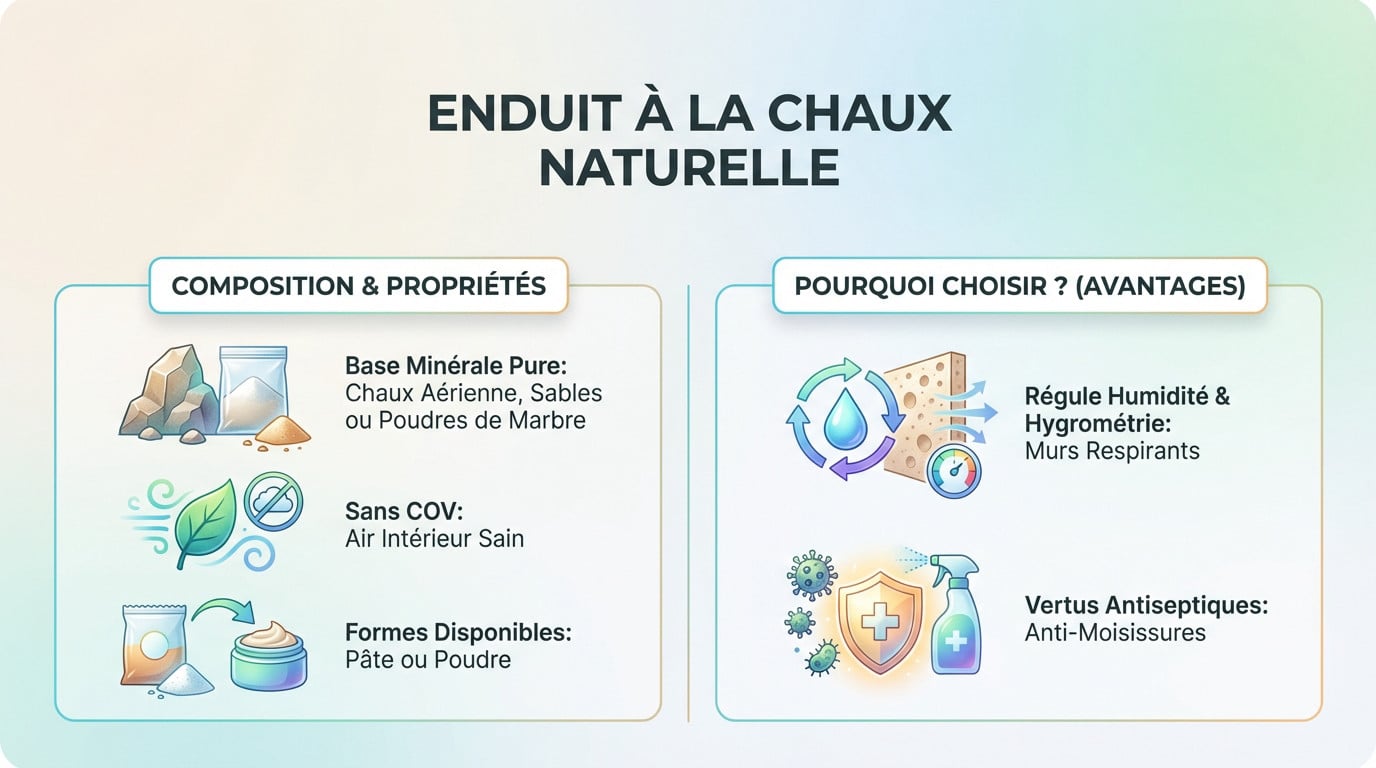
Air lime is mixed with sand or, for greater finesse, marble powder. It is a pure mineral product, with no chemical additives.
Forget solvents. This material guarantees total absence of VOCs, to protect the quality of your indoor air.
In a creamy paste or in powder form, it adapts perfectly to the technical nature of the site.
Why choose breathable coverings?
Lime manages humidity like a lung. It lets your walls breathe naturally by evacuating water vapour, without ever blocking essential heat exchange.
Its high pH, a natural antiseptic, prevents mould on your decorative coatings or your marmorino.
Techniques and finishes for your walls
But beyond technology, visual rendering makes all the difference on a building site.
The different styles of decorative rendering
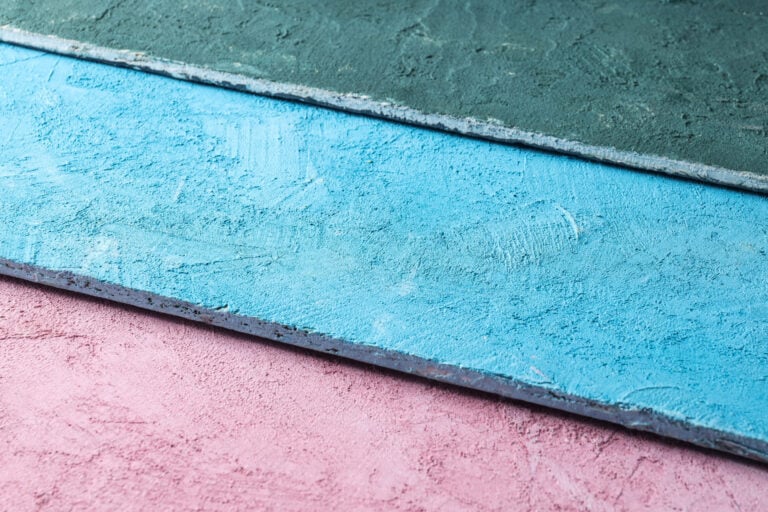
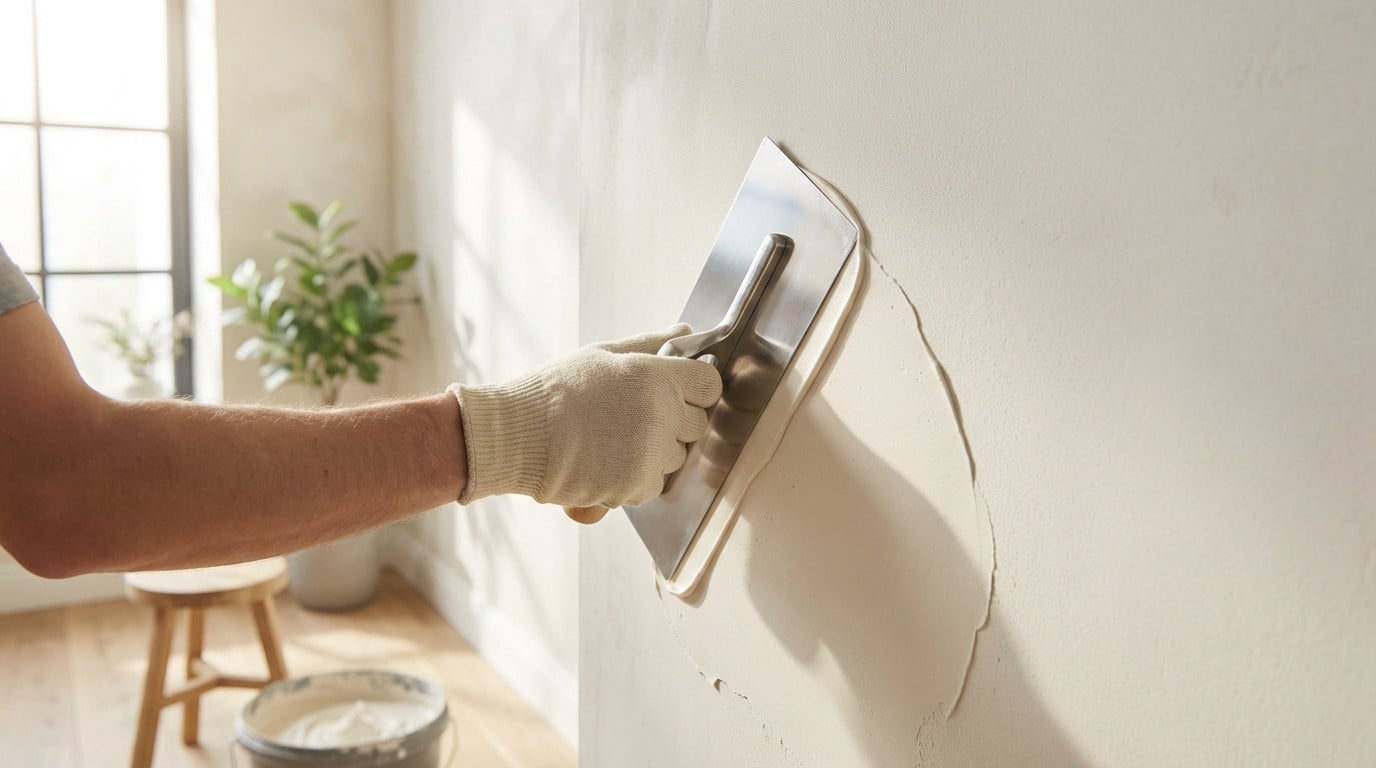
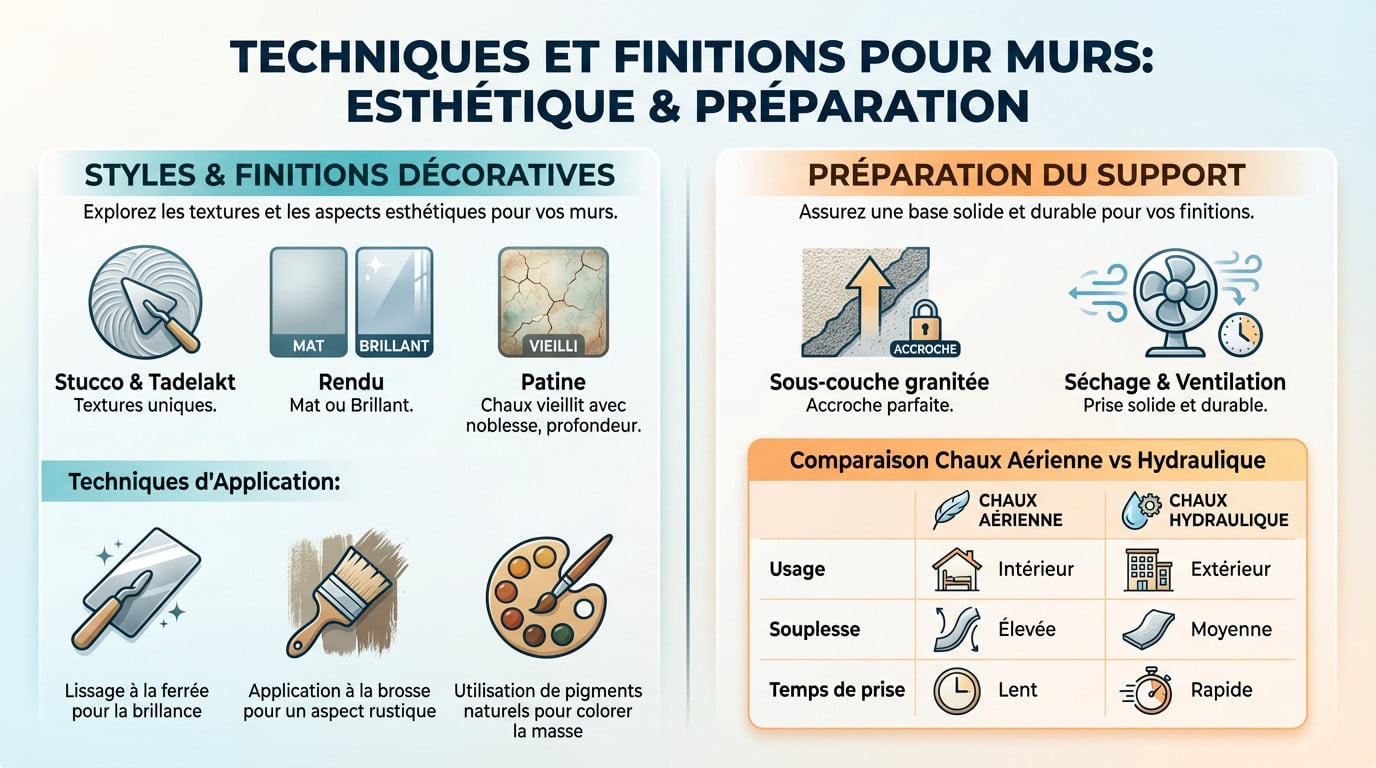
Le Stucco transform your walls. Each stroke of the trowel creates a unique texture, oscillating between matt and gloss.
The patina, improves. Lime gains in nobility and depth over the years.
- Smoothing with iron for shine
- Brush application for rustic appearance
- Use of natural pigments to colour the mass
Preparing the substrate well before application
The granite underlay is vital. It guarantees perfect mechanical grip on plaster or concrete.
Ventilate the room thoroughly. Optimal drying conditions the the final hardness and durability of your coating.
Opting for natural lime rendering means giving priority to the perfect combination of traditional aesthetics and sanitary comfort. Our technical expertise ensures rigorous application, transforming your walls into living, sustainable surfaces. Contact our teams today to make your renovation project a reality with excellence.
FAQ
How does lime coating help to regulate humidity and improve indoor air quality?
Air lime rendering is characterised by its high water vapour permeability, an essential property that allows your walls to «breathe». By facilitating the evacuation of structural moisture, it naturally regulates hygrometry, contributing to stable, long-lasting thermal comfort. In addition to managing water flow, lime has a high alkalinity, giving it natural bactericidal and fungicidal properties. By opting for this material, you can effectively prevent the development of mould and purify the atmosphere in your home without resorting to chemical treatments.
Is lime rendering reserved for rustic interiors or can it be adapted to contemporary styles?
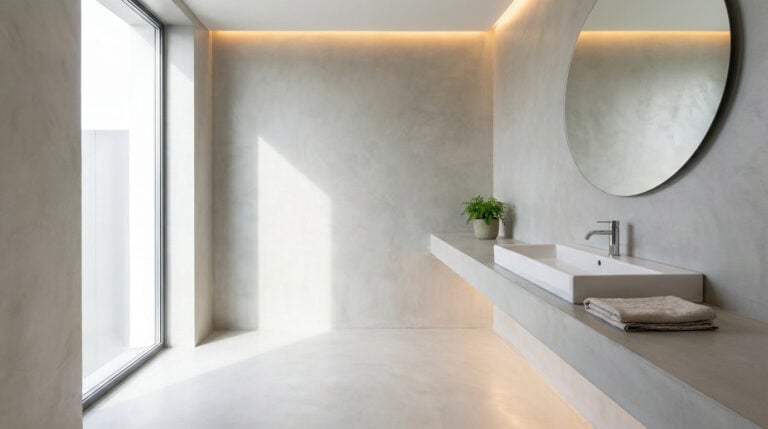
It's a common misconception that lime excels in the renovation of old buildings, but today it is a major asset in contemporary, minimalist decoration. Thanks to its matt, velvety texture, it absorbs light rather than reflecting it, creating a soft, enveloping atmosphere impossible to achieve with conventional paint. By playing with the ironing (smoothing) or by keeping a rougher grain, we can obtain very pure finishes that blend in perfectly with design, Scandinavian or industrial interiors.
Is it difficult to maintain a lime wall on a daily basis?
On the contrary, lime is very easy to live with thanks to its anti-static properties. Unlike synthetic paints, which attract static electricity, a lime wall does not attract dust, which considerably reduces the need for cleaning and preserves air quality for allergy sufferers. For high-traffic areas, apply a natural wax or water-repellent protection to make the surface washable with soapy water, without blocking the wall's breathability.
Can lime coating be applied to plasterboard or old paintwork?
Absolutely. Although lime is traditionally associated with stone or brick, it works perfectly on modern substrates such as plasterboard (BA13), fermacell or sound old paintwork. The secret lies in the preparation: we apply a special undercoat (primer) that creates an adhesion bridge between the smooth substrate and the mineral coating. This allows you to bring the cachet and nobility of a natural material to a new build or standard renovation.
What variety of colours and finishes are possible with lime?
Lime offers almost infinite creative freedom. Unlike «flat» industrial colours, lime is coloured using natural pigments mixed into the mass, giving a deep, vibrant colour that subtly shades according to the light of day. From dazzling pure white to warm ochres, deep greys and intense blues, anything is possible. The craftsman's hand then determines the texture: brushed, floated or perfectly smooth and silky like stucco.
What exactly is the composition of traditional natural lime rendering?
The formulation of a traditional rendering is based on pure minerality, guaranteeing the durability of the work. The base is made up of lime (binder) mixed with aggregates such as sand or marble powder, the grain size of which defines the final texture, from rustic grain to mirror polish. For decorative finishes such as Stucco, we enrich this mixture with natural pigments for colouring in the mass. Natural additives, such as casein or linseed oil, can be added sparingly to improve plasticity or adhesion, without ever altering the ecological qualities of the coating.