
Stucco or Marmorino: which decorative coating should you choose?
Faced with the demands of a renovation project, distinguishing the technical nuances between Stucco, Marmorino and Calce Cruda often remains a complex task for homeowners in search of excellence. Our detailed comparison sets out the specific properties of each material, from the mirror-like sheen of Venetian stucco to the organic texture of raw lime, so that you can perfectly match the cladding to your aesthetic aspirations. You'll have a clear vision for select the decorative rendering that guarantees exemplary durability and add inestimable value to your home.
Stucco, the art of imitating marble and shine
After an overview of the world of decorative plasters, here we tackle the king of gloss: stucco.
What is authentic Venetian stucco?
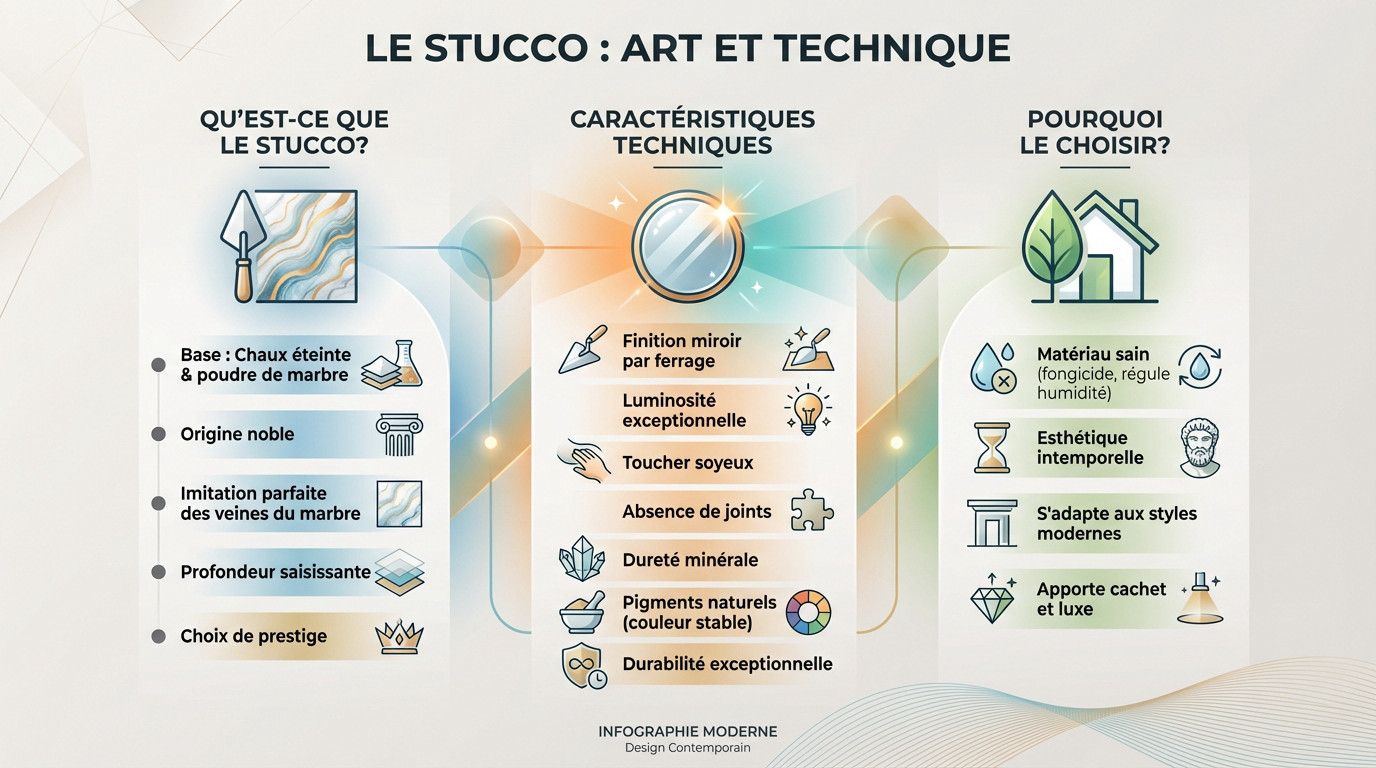
This A noble covering inherited from the Italian Renaissance is made from slaked lime and fine marble powder. This is the historic recipe for exceptional walls. We continue this centuries-old tradition.
Applying successive coats creates a striking visual depth that is impossible to achieve with paint. The natural veining and transparency of the stone are faithfully reproduced. This is a striking mineral trompe-l'oeil. The result vibrates under the light.
Opt for Stucco Vénitien à Satigny - Decorative walls Geneva has a definite taste for prestige. Absolute elegance. Your interior gains immediately in character.
The technical characteristics of a mirror finish
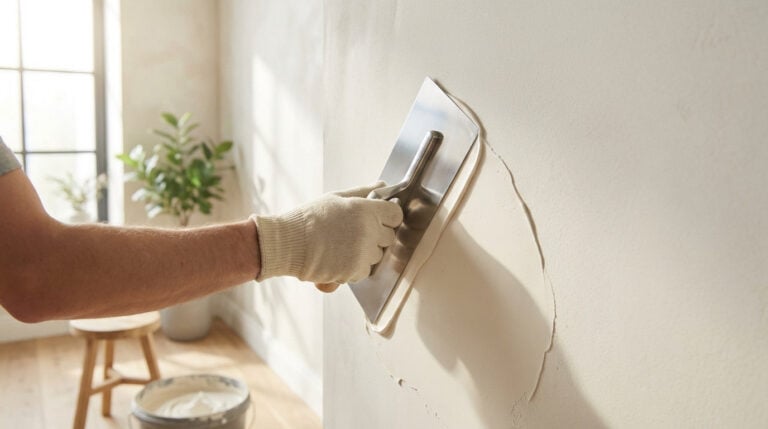
The secret of this brilliance lies in the energetic ironing with a stainless steel spatula. This mechanical action closes the surface for mirror effect.
Here are the key assets of this technical finish:
- Exceptional brightness
- Silky touch
- No seals
- Mineral hardness
The use of natural pigments guarantees unalterable colour stability against UV rays. The final shade will always depend on the hand of the craftsman. Each wall becomes a unique work of art.
Beyond its aesthetic appeal, the durability of this material is remarkable. It improves over time without ever peeling like synthetic paint. It is a long-lasting investment.
Why choose this coating for your interiors?
Lime acts as a natural moisture regulator, allowing your brickwork to breathe. Its fungicidal properties purify the air in your home without the use of chemicals. Do you live in a a healthier environment.
This floor covering has stood the test of time without ageing or being affected by passing fashions. It gives an instant undeniable cachet to your space. Luxury lies in this timelessness.
Don't confine it to the classic style. In greys or muted shades, it's perfect for contemporary interiors. It's a modern luxury. When faced with the choice of Stucco vs. Marmorino vs. Calce Cruda: which decorative coating to choose, it's often a case of the shine that wins.
Marmorino for a smooth, mineral finish
If the stucco shines, the marmorino, on the other hand, has a more sober elegance and a more carnal texture.
Origins and composition of Italian marmorino
Marmorino is more than just a coating; it is a direct Venetian heritage. Unlike ultra-fine pastes, it incorporates a marble powder with a more pronounced grain size, often greater than 0.3 mm. This noble material gives it a unique density.
Thanks to this structure, we can work with more generous thicknesses to sculpt the material. For a Marmorino à Satigny - Decorative coating Geneva, this density offers a deep matte finish. Far from excessively shiny, it absorbs light with distinction.
Le The visual result is strikingly realistic in mineral terms. It's as if you're looking at real stone, with the patina of time. It's a surface that's easy on the eye and incredibly soothing for the mind.
Major differences between stucco and marmorino
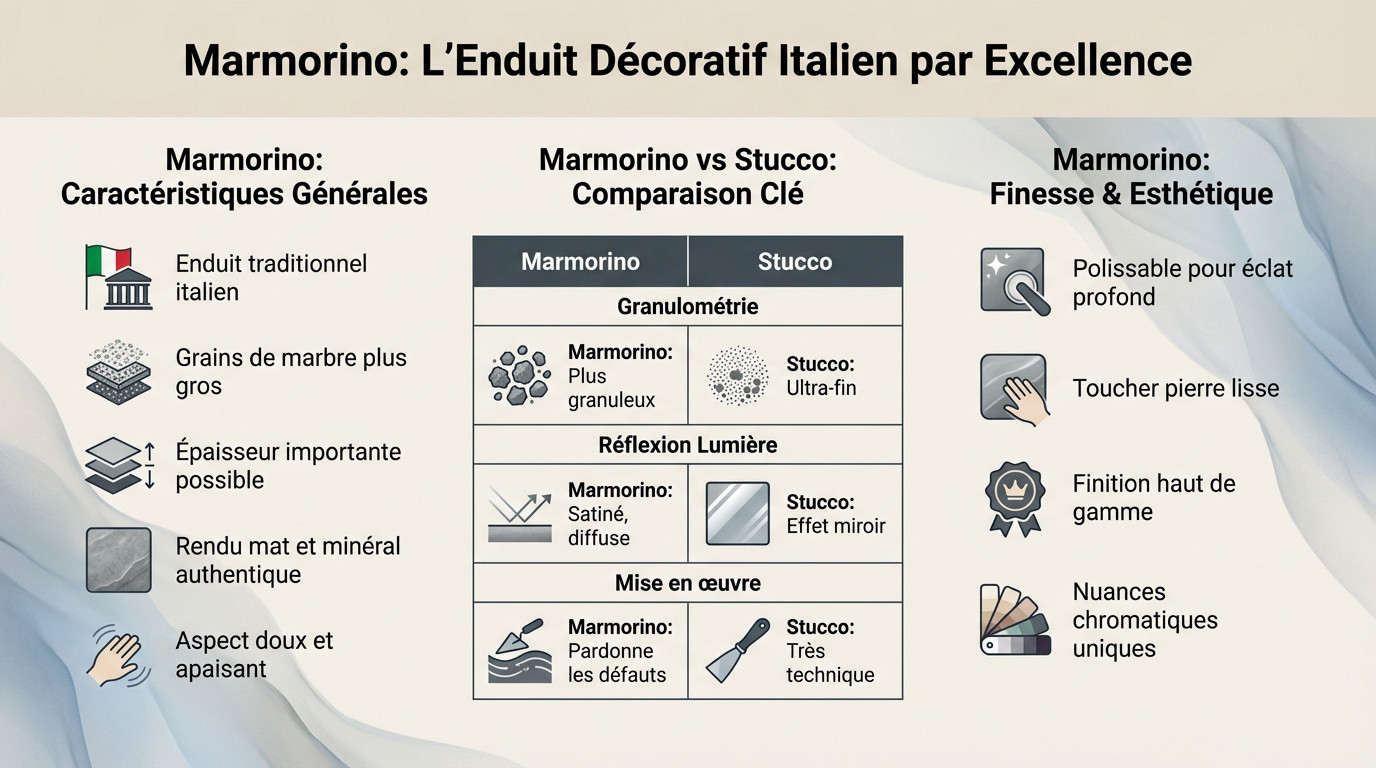
The fundamental distinction lies in the grain. Where classic stucco is an impalpable cream, marmorino asserts its granularity. It is this framework that gives body to the walls.
Observe the reaction to the lighting. Stucco acts like a cold mirror, reflecting the image of the room. In contrast, marmorino diffuses a satin, almost velvety light. The choice depends solely on the atmosphere, intimate or spectacular, that you are looking for.
In terms of application, its texture is more forgiving of micro-imperfections than its ultra-smooth cousin. But make no mistake: its implementation remains a matter of highly technical craftsmanship.
The fine polish and satin mirror effect
However, the marmorino also knows how to be a star. Once insistently shod, it reveals a deep radiance, never superficial.
Touch becomes a sensory experience in its own right. It's the freshness of polished stone under your palm. This irresistible tactile sensation, which compels you to caress the wall, is the the unmistakable signature of top-of-the-range finishes.
Finally, the magic happens in the colour. The natural pigments vibrate differently depending on the orientation of the grain, creating changing shades. It's not a flat colour, it's a living material that fills the space with a rare elegance.
Calce cruda, the authenticity of natural lime
For those looking for even more naturalness and depth, the calce cruda radically changes the game.
Traditional rendering for lively walls
Calce Cruda, literally «raw lime», is a skilful blend of hydrated lime and purified clay. This combination creates a raw finish, far removed from aseptic surfaces, offering a absolute and singular mattness.
Here, imperfection becomes a visual signature. You can make out the passage of the spatula, the gesture of the craftsman sculpting the material. It's not a smooth wall, it's a surface that asserts its character without seeking artificial perfection.
Here are the markers of this unique aesthetic :
- Deep matte appearance
- Irregular texture
- Earthy tones
- Organic atmosphere
Perspiration and durability of noble materials
This covering is extremely breathable, allowing the wall to breathe completely. It is a the ideal solution for healthy living, Clay plays an active role in capturing unpleasant odours.
Far from deteriorating, this coating acquires a patina and nobility over time. It becomes more beautiful as it ages, transforming your decoration into a real long-term investment, far beyond a simple paint job.
We're talking about a purely ecological material. No VOC emissions, no chemicals hidden in the formula. This is pure mineral applied to your walls, guaranteeing a healthy indoor environment.
The textured look versus polished finishes
If you're still on the fence about Stucco vs. Marmorino vs. Calce Cruda: which decorative coating to choose, you should know that Calce Cruda refuses to shine. Here, we are looking above all for the relief and density of the material.
Architects are using it in prestigious properties to create a serene, timeless atmosphere. Highly prized in contemporary villas, this material embodies discreet luxury that doesn't scream out its name, but you can feel it immediately.
Thanks to the presence of clay, the rendering is more supple and offers a more natural appearance. better impact resistance. It cracks much less than very rigid or cemented stucco. This is a major technical advantage for the longevity of the work.
Technical comparison and use in damp rooms
Which coating for your bathroom or kitchen?
Can lime be installed in wetlands? Yes, it's technically feasible. But you need to select the right product to avoid disaster.
To compare options, see our dossier on Waxed concrete in the bathroom. Stucco, if well protected, offers an attractive remarkable resistance. It's a reliable option against damp.
In the kitchen, beware of hot grease splashes. Marmorino often proves to be the best compromise here. It's robust and perfectly washable.
Protection and maintenance: waxes and varnishes
Lime is naturally porous. It is imperative to saturate it in order to make it completely waterproof. Otherwise, the water will immediately seep through.
Traditionally, beeswax or Marseille soap is used. This method enhances shine and effectively protects against stains. Apply carefully with a spatula.
Modern waterproof varnishes offer an invisible alternative. These coatings can now be used directly in the shower. This is a a genuine technical revolution.
Comparative table of renderings and resistances
To referee the Stucco vs. Marmorino vs. Calce Cruda match and find out which decorative plaster to choose, Here are the facts. Every subject has its own requirements.
| Type of coating | Visual appearance | Gloss | Humidity resistance | Difficulty of installation |
|---|---|---|---|---|
| Stucco | Marble | High | Good with wax | Very high |
| Marmorino | Smooth stone | Satin | Excellent | High |
| Calce Cruda | Raw/Mat | None | Average | Average |
Implementing and budgeting a top-of-the-range project
Finally, let's get down to business: installation technique and cost of these exceptional finishes.
Preparing substrates: from plaster to tiles
An exceptional finish requires irreproachable support, This is the absolute basis of our work. We don't tolerate any cracks or roughness under stucco, as the slightest defect would immediately stand out. The wall must be sound, dry and perfectly flat before any work is carried out.
You wish to renovating a tiled bathroom without demolishing everything ? It's technically feasible, thanks to the application of a special primer followed by careful levelling of the existing tiles. This method avoids breakage and dust, and saves an enormous amount of time.
The key to success then lies in the absolute respect for the drying times between each pass. Lime is never pressed; it must set naturally to last. It's a work of patience that determines final strength.
Why use a specialist craftsman?
Don't confuse these mineral coatings with conventional decorative paint. The technical process is complex, in particular to apply the plaster at the precise moment and with the right technique. reveal its brilliance. You need to know how to crush the material with the tool to achieve the desired effect.
Our expertise also lies in mastering the proportions and handling of natural pigments. A mistake in mixing or colourimetry, and the whole wall has to be redone. It's a a true craft that leaves no room for improvisation.
Calling in a specialist means you can be sure of a lasting results with no nasty surprises. This way you avoid the costly disappointments associated with amateur applications that often fail. The final result will be well worth the investment.
Cost per square metre and price factors
Let's be clear: these top-of-the-range finishes cost more than standard paintwork. You pay for the nobility of the material, but above all you pay for the hours of skilled labour. The complexity of installation fully justifies this pricing.
A number of technical parameters can affect the final cost of your project. To referee the Stucco vs. Marmorino vs. Calce Cruda match: Which decorative coating to choose?, we analyse :
- Le number of layers required for depth.
- Initial state of the walls before work.
- Le type of pigments chosen for the shade.
- The protective finishes (wax or water repellent).
Top-of-the-range stucco requires a serious budget. But the added value to your property is real and immediate.
Whether it's the brilliance of stucco, the versatility of marmorino or the authenticity of calce cruda, these mineral renderings offer a wide range of possibilities. healthy, durable aesthetics. We put our craftsmanship at the service of your vision for exceptional finishes. Contact us for work together on your decorating project.
FAQ
What are Venetian stucco and marmorino made of, and how are they applied?
These exceptional renderings are based on a noble composition combining air lime, selected marble powder and natural pigments. This mineral alchemy not only guarantees a deep aesthetic appeal, as well as purifying properties for your interiors. The main difference lies in the grain size: an impalpable powder for the mirror-like shine of stucco, and more noticeable marble grains for the satin-finish stone look of marmorino.
Application is a veritable art that requires no improvisation. It requires the meticulous superimposition of several thin coats, respecting precise drying times. The secret of the finish lies in the crucial «ironing» stage: the craftsman applies controlled pressure with his spatula to compact the material and bring out the shine, revealing the veining and depth characteristics of these prestigious coatings.
How long does a lime coating such as stucco really last?
Stucco and its lime variants offer a unique remarkable longevity, often estimated at over 25 years, The result is a coating that far surpasses conventional paints. Thanks to the natural process of carbonation, the plaster hardens over time, literally turning back into stone on your walls. This mechanical resistance is accompanied by excellent resistance to mould and bacteria, inherent in the alkaline nature of lime.
As well as being robust, it is a living material that retains its beauty as it ages, acquiring an elegant patina rather than deteriorating. Its permeability to water vapour allows the walls to breathe, evacuating internal humidity and guaranteeing the healthiness of the building over the very long term. It is a a long-term investment that adds lasting value to your property portfolio.
What palette of colours and styles can you explore with contemporary stucco?
Far from being confined to classic styles, contemporary stucco offers a wide range of possibilities. absolute creative freedom thanks to a wide range of pigments. Current trends favour sophisticated, mineral shades: warm, chalky whites for a Mediterranean luminosity, earthy greens like olive for an organic ambience, or deep greys and muted blacks for a bold, modern look.
The final style will depend as much on the colour chosen as on the craftsman's hand. We can modulate the effects to obtain finishes ranging from absolute mirror, The result is a range of textures and finishes that evoke the splendour of Venetian palaces, with matt, rough textures reminiscent of concrete or natural stone, ideal for minimalist, uncluttered interiors.

A clear and relevant article, with a fair reading of the differences between stucco, marmorino and calce cruda.
The emphasis placed on materiality, texture and the relationship with light is particularly appreciated, as is the reminder of the importance of the support and craftsmanship in the final result.
The content is useful and well mastered, and we'd be happy to recommend it in the context of an architectural project.